
Mouse droppings aren’t just gross—they’re a warning sign. If you’ve found some in your home, it’s time to act fast. Suddenly seeing those little pellets scattered on your floor can be a shock, especially when you’ve worked hard to keep things clean and pest-free.
But don’t panic. Here’s exactly what to do next to identify, clean up, and keep the mice from coming back.
Table of Contents
You Found Mouse Droppings—Now What?
Mouse droppings aren’t just a gross surprise—they’re a major red flag that unwanted guests have made themselves comfortable in your space. Whether you live in a suburban home or a city apartment, mice don’t discriminate. If they find food, warmth, or shelter, they’re in—and they usually don’t come alone.
Suddenly coming downstairs and seeing mouse droppings on the floor in your home can be a bit of a shock. After all, you thought your property was 100% clean and pest-free.
But what should you do in a situation like this? What’s the best path forward?
That’s where this post can help. We look at some of the things you should do if you see mouse droppings and how to proceed.
Step 1: Confirm It’s Mouse Droppings
The first step is to confirm the identity of the droppings. You want to ensure that they really came from a mouse and not something else, like a bat or cockroach.

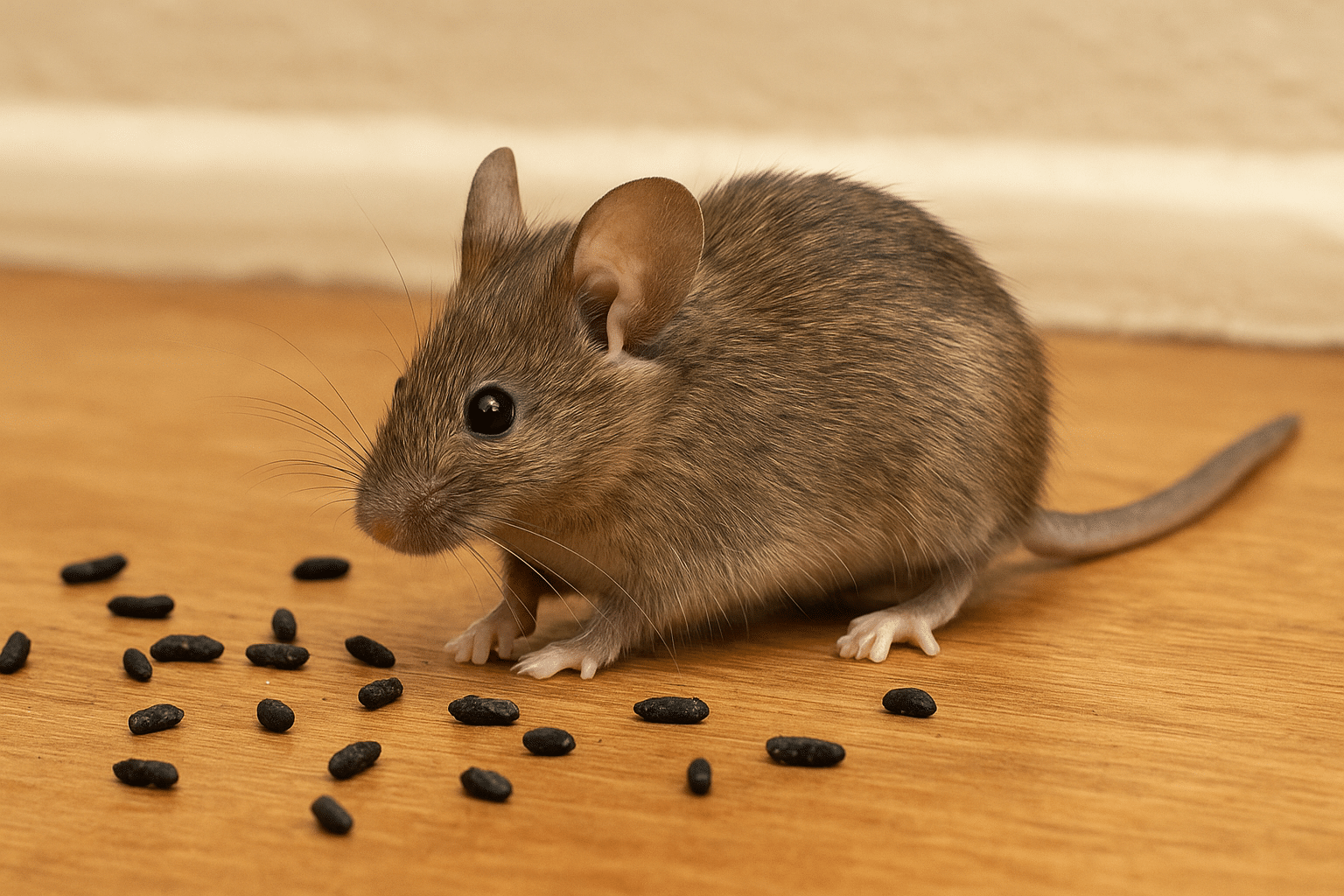
Mice produce long strings of pellet-like droppings, usually less than ¼ inch long. They’re conical and often firm, usually brown or light brown in color, depending on what the critter is eating.
Before handling droppings, put on protective gear. Don’t handle them directly, as they can contain disease.
🔍 Pro Tip: Look for clusters. Mice poop often, and usually in the same areas—near walls, behind appliances, and close to food sources.
Step 2: Clean Up Safely (Seriously—No Vacuums)
When removing the droppings, make sure you do it in a safe way. Don’t vacuum them as it can loft harmful particles into the air.
Instead, start by spraying the droppings with a disinfectant of your choice and then pick them up with a paper towel before putting them in the bin. Make sure you seal the trash bag and place it outside.
Never dry sweep or vacuum mouse poop—this can send particles airborne and put you at risk for things like hantavirus.
Step 3: Sanitize Like Your Kitchen Depends on It
Next, sanitize the area and ensure you kill off any remaining germs. Mice are dirty creatures and will often tread in gunk from outside, so you’ll want to clean any paths that they may have taken to their poop spot, too.
If you think that the mouse might have been on countertops, use a bleach solution and wipe these down too. Don’t take any chances, especially if there is a risk that their residues might come into contact with food.
🧼 Don’t forget:
- Wipe all baseboards, corners, and cabinet interiors
- Disinfect under appliances
- Clean any cloth (towels, rags, dish mats) they may have walked across
If you think that the mouse might have been on countertops, use a bleach solution and wipe these down too. Don’t take any chances, especially if there is a risk that their residues might come into contact with food.
🧼 Don’t forget:
- Wipe all baseboards, corners, and cabinet interiors
- Disinfect under appliances
- Clean any cloth (towels, rags, dish mats) they may have walked across
Step 4: Find and Seal All Entry Points
The next step is to locate the possible entry points that the mouse may have come through. Shutting these off is essential.
If you aren’t sure where the mice are coming from, contact pest control experts who can locate and seal entry points before it becomes an infestation.
🧱 Check:
- Under sinks
- Behind stoves
- Near utility pipes
- Inside closets
- Garage walls or crawlspaces
Use steel wool, copper mesh, and silicone caulk—not just spray foam.
Use steel wool, copper mesh, and silicone caulk—not just spray foam.
Step 5: Trap If You Suspect They’re Still Inside
You might also want to set traps if you’re worried that mice might still be in your home. Glue traps or bait stations near droppings can be helpful.
Whether you should be humane in your approach is something you should discuss with a professional exterminator. Often, they can tell you what the best strategy is and how you can approach the issue.
🪤 Options include:
- Snap traps
- Glue boards
- Enclosed bait stations
- Electronic zappers
Place them where droppings were found, along walls—not in the middle of the room. Mice follow edges.
Step 6: Prevent Future Mouse Problems
Finally, you should adopt strategies that prevent future pest infiltrations. Top tactics include things like:
- Regularly taking out garbage and trash cans
- Sealing all food in containers
- Not allowing any food to remain on countertops in the form of crumbs
- Talking to professional pest control services about other strategies you could use to prevent the problem from recurring
Bonus tips:
- Store pet food in sealed containers
- Trim shrubs back from the foundation
- Use door sweeps and screens on vents
Step 7: Know When to Call a Pro
If you’re still spotting new mouse droppings, hearing scratching at night, or catching a whiff of that awful musty urine smell—it’s time to bring in professionals.
Here’s what they’ll do:
- Inspect your entire home
- Identify all active and inactive nests
- Set a customized treatment plan
- Offer follow-up and prevention care
You’re not just paying for mouse removal—you’re paying for peace of mind.

Leave a Reply