
When you live life in motion — planes, concerts, road trips, and city soundtracks — it’s easy to forget that your ears are working overtime. As a travel writer who lives half my life between terminals and train stations, I’ve learned that you need to protect your hearing while traveling as it is just as essential as protecting your passport.
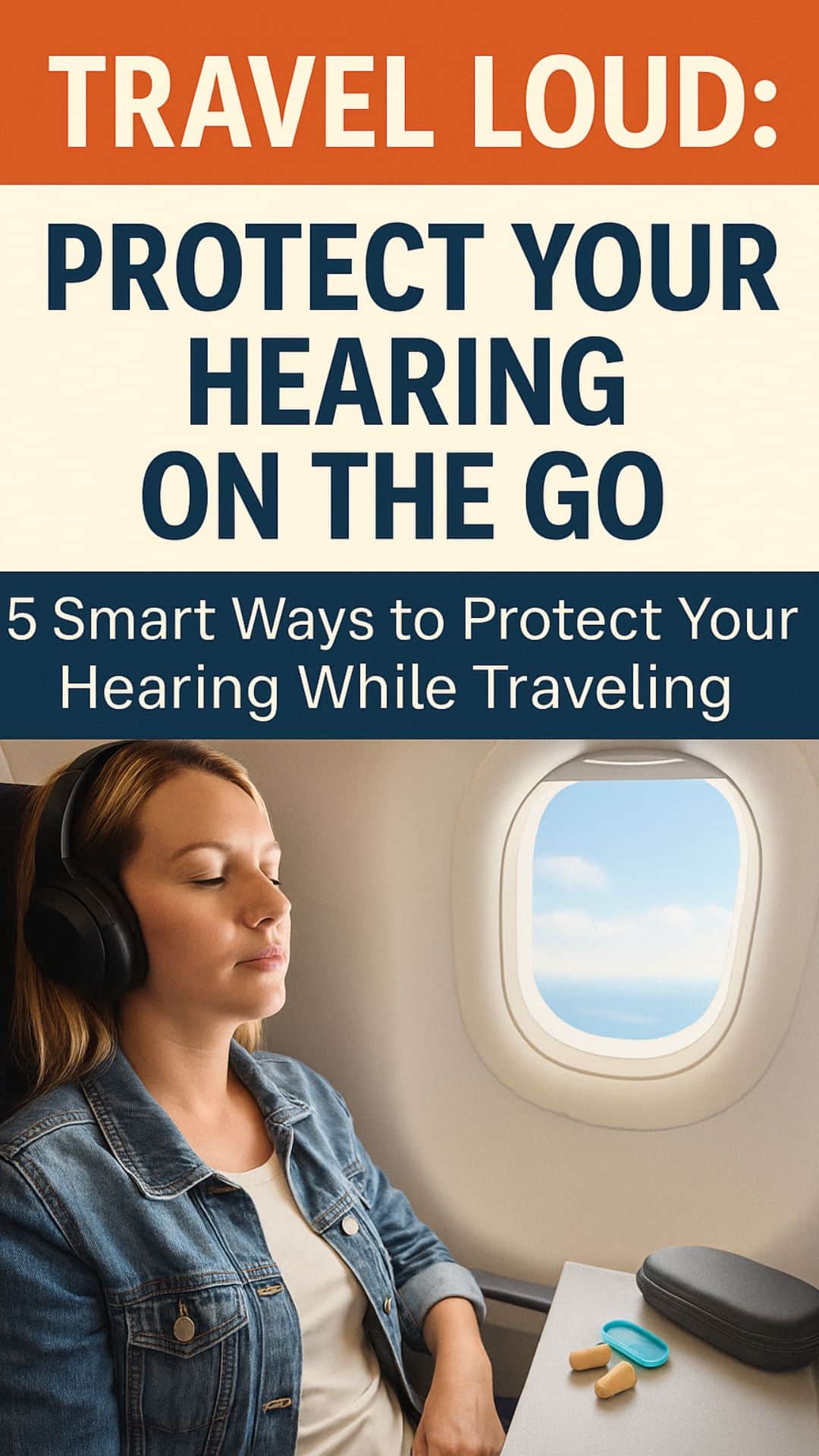
Noise is part of every adventure — jet engines, bustling streets, hotel air conditioners, and that concert you couldn’t resist. But hearing loss and fatigue sneak up faster than you’d think.
From loud stadiums that I visit with screaming fans, to concerts where the music stays with you in your ears long after you have left, I suddenly thought about how to protect your hearing while traveling and I want to share this.
Here’s how to travel loud, live fully, and still safeguard one of your most valuable senses, which all tranlsates to protect your hearing while traveling.
Table of Contents
✈️ 1. Plan Ahead to Protect Your Hearing While Traveling
Every trip starts before you even zip the suitcase. And when you’re constantly in noisy environments, preparation is everything.
The first step? Know your volume limits. Airplane cabins average around 80–85 decibels. Add engine roar, crying babies, and those endless safety announcements, and you’ve got a full-on symphony of stress on your ears. Consider that alone a reason to protect your hearing while traveling on a plane!
So before you board, pack hearing protection right alongside your travel chargers and toiletries. And if you’ve noticed changes in how you hear before a big trip, you might wonder, are at-home hearing tests accurate? They can be a simple first step in checking your hearing, especially before a long journey or noisy adventure.
Even simple routines can make a difference for travel and hearing — this guide on maintaining ear health while traveling breaks it down in a way that actually makes sense.
What to pack:
- Noise-canceling headphones: Choose adjustable models that let you enjoy entertainment without cranking the volume.
- Travel-grade earplugs: Soft silicone versions are perfect for sleeping through jet lag, train noise, or hotel neighbors.
- Pressure-relief earplugs: Ideal for takeoff and landing to reduce ear pain and balance pressure naturally.
🎧 2. Using Noise-Canceling Headphones To Protect Your Hearing While Traveling
I never board a plane without them — but there’s a trick to using them safely. Many travelers turn the volume up to block cabin noise, which only makes things worse. Instead, let the headphones do the work.
Active Noise Canceling (ANC) tech lowers background noise so you can keep your music or movie at a safe level. And if you wear hearing aids, choose over-ear headphones that don’t interfere with your devices or cause feedback.
Bonus: ANC works just as well on subways, trains, and long-haul buses. The quiet makes a difference — not just for your ears, but for your sanity. While we were in NYC I used this solution nonstop on the subways, that loud noise was grating!
💤 3. Protect Your Hearing at Night Too
Even sleep can come with a soundtrack — from hotel HVAC hums to late-night hallway chaos. That’s why earplugs are non-negotiable in my bag.
Travel hack: Keep a few pairs in different bags. One in your carry-on, one in your bedside pouch, and one in your toiletry kit. They take up zero space, and you’ll thank yourself when the walls are paper-thin.
If you wear hearing aids, this is also your time to give your ears a break — remove and store them properly. Tossing them on a nightstand invites dust, humidity, or worse. Instead, keep your hearing aid safe in a hard-shell case or charging station designed for travel.
Travel isn’t predictable, but your care routine can be.
🚆 4. Manage Noise Exposure During the Day
Whether I’m hopping trains across Europe or exploring a new city, I always carry quick-access hearing protection. Be viligent and protect our hearing while traveling.
Trains, subway stations, and sports arenas can hit 100+ decibels — and short bursts of sound at that level can still do damage. Ballgames, parades, and festivals might feel fun in the moment, but ringing ears afterward? Not so much.
Quick-save tips:
- Stand slightly away from speakers or train whistles.
- Use reusable high-fidelity earplugs that lower volume but keep clarity.
- Take “quiet breaks” — step outside or into calmer spaces to let your ears recover.
Even a few minutes of rest helps prevent noise fatigue.
🌎 5. Store and Clean Your Hearing Gear on the Go
Between sunscreen, humidity, and motion, your hearing aids or earbuds face a lot. So, take a few minutes every night to wipe them down and recharge.
Pack a mini cleaning kit — soft brush, cloth, and desiccant pouches if you’ll be somewhere humid. It takes seconds, but it extends the life of your equipment by years.
And please don’t just toss your hearing aid or earbuds into your tote. That’s how you end up with tangled cords, broken tips, or moisture damage. Keep them dry, protected, and stored like the investment they are.
Because a small habit now saves you big frustration later.
💬 Bonus: Be Aware of Early Warning Signs
If your ears feel full, muffled, or you hear constant ringing (tinnitus), it’s a signal — not a souvenir. Those are early signs of noise fatigue or hearing loss.
Schedule a quick check-in with an audiologist once a year, especially if you travel frequently. They can perform a test, adjust your hearing devices, or recommend better protective options based on your lifestyle.
A few minutes in their office can keep you hearing your next adventure clearly.
Traveling Loud and Living Smart
There’s a fine line between loving sound and overdoing it. But you don’t have to choose between silence and experience. With smart habits and a little pre-trip planning, you can enjoy concerts, flights, and the chaos of travel without sacrificing your hearing.
Your ears are with you for every airport boarding call, ocean wave, and encore — so protect them like your passport.
Because traveling loud should be about collecting memories, not hearing loss. ~Dana XO

Leave a Reply